Complete this form to access the benefit
If your employer offers Parentaly as a benefit, fill out your details below to get started! We’ll contact you within 1 business day with next steps.
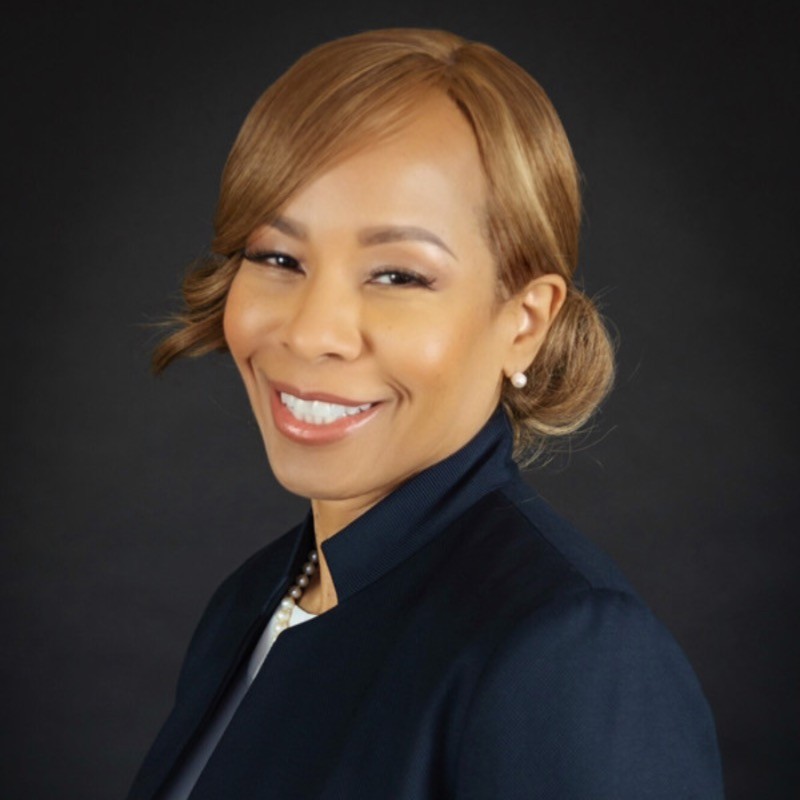


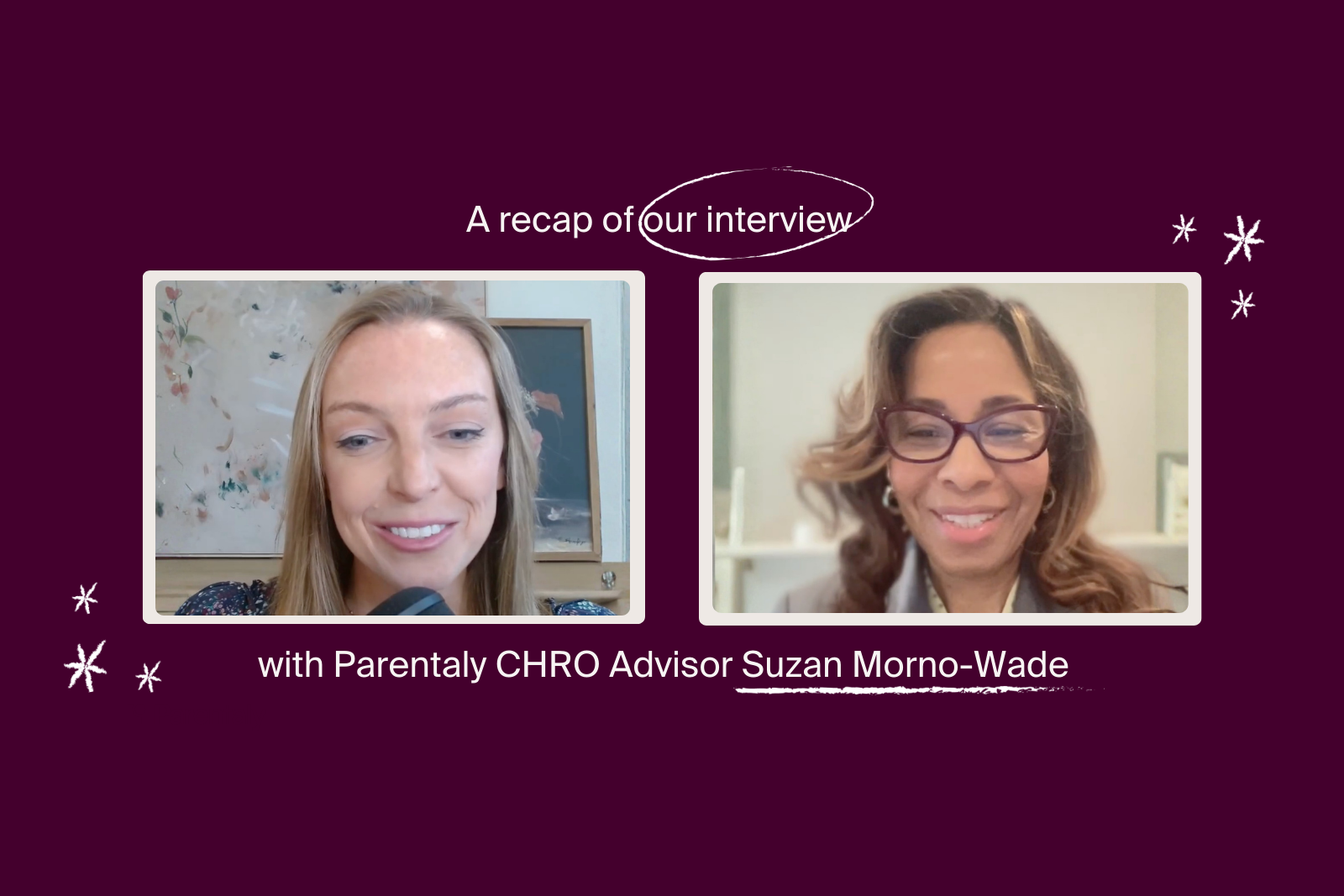

Suzan Morno-Wade never set out to become a trailblazer for working parents. In fact, for years she barely talked about her own experience navigating parental leave.
At the time she became a parent, Suzan was in a high-stakes leadership role, balancing intense pressure at work with the personal journey of becoming a mother.
Despite her seniority, she wrestled with familiar questions: Would stepping away change how she was perceived? Could she be present at home without losing ground at work?
Like so many others she found herself quietly worrying about what taking parental leave might cost her.
After learning about Parentaly, Suzan reflected on how a program like this could have helped her navigate that season of her career - and she joined our CHRO Advisory Board to help expand the reach of effective leave support at more companies.
Suzan was previously the CHRO at Xerox and brings extensive operational and leadership experience to our work helping companies manage parental leave as a critical moment for business continuity and performance.
In the episode, she opens up about her experience as a working parent and why she believes parental leave is a “moment of truth” for companies.
She also talks about how organizations can turn parental leave from a potential risk into a strategic advantage, why manager training is essential, and how the future of work is all about flexibility.
Disclaimer: This podcast transcript is autogenerated and may contain minor errors or discrepancies.
Allison: Hi, Suzan, thank you so much for joining me here today.
Suzan: Hi, good morning, Allison. I am excited to be here and excited to be talking to you. So thank you for having me.
Allison: Of course, and we are going to get into the topic at hand around parental leave, but I couldn't miss the opportunity to take advantage of your time and ask a couple questions about you before we get into the parental leave stuff. You have achieved so much in your career to date and no doubt will continue to do great things. I'm curious when you look back at everything you've achieved so far, to what do you attribute your success?
Suzan: Wow, well thank you so much for the kind words and recognition. I'm actually humbled by it. Several things. I'll start with my parents who emigrated to the US and had a really strong belief and built a foundation in us around education, improving oneself, and also giving back to others who have helped you in that journey. I think that's key.
The second I would say is the fact that I've been really blessed to have had a number of really, really great mentors and advocates of my career, my professional career. And I'll note that they've all been men by the way, who have really helped shape who I am today and helped my success.
And then probably lastly, and you know, one that I would say is less important. It's just self-awareness and a drive to improve oneself. I have always focused on how do I make myself better? How do I think about what is a gap and what I could be doing differently? And so that sense of continuous improvement, continual learning is something that I think is important to that success.
Allison: And in that vein of continuous improvement, are there any things that you have not yet achieved or done that you still have on your professional bucket list?
Suzan: Professional, I thought you were going down the path of personal. Because I tell... Well, I'll just throw in a little tidbit. I will tell you, parenting is much more difficult than anyone ever appreciated. And I can't even imagine how our parents did what we are faced with today, with all of the extra noise that is in the way.
Allison: You can do that too, but I'm curious professionally.
Suzan: So I continually strive to be a better parent and that's a day by day challenge. You know, I think on the professional side, one of the things that I am really focused on now, it's one of many things. As I have started to build a board portfolio, and that's both corporate board and advisory board, how do I give back in a way that is different than I did sitting on the other side of the table as an operator? And I continue to rely on others who are much more advanced and experienced in this area in how you govern, how you advise. And so I want to be the best that I can be for you and for others.
Allison: You teed me up perfectly for my next question, which was, you can do any number of things. You are in high demand. I'm sure so many people are asking for your time to mentor them, to advise them, to be on their board and whatnot. Why did you choose to join the CHRO advisory board at Parentaly?
Suzan: Well, wow, so many reasons why, but I think in short, your advisory board brings together both personal experience and professional purpose. And I loved our conversations together, Allison. I loved the mission driven aspect of it tied with the data piece.
And I really feel the strong sense of commitment to equity, measurable outcomes, and at the end of the day, real world impact, because that's what it's about. So all of those things combined, I think, were reasons why I said yes to this opportunity.
Allison: I'm curious if there's also a moment in your personal life that when I first approached you, you didn't know who I was, right? It's like this random person reaching out through a mutual connection. Is there an aspect of parental leave, whether that is supporting folks in the workforce or your personal parental leave experience that you thought about or took into account when you were considering joining us?
Suzan: Yeah, absolutely. And by the way, Allison, I did know who you were from. Yes, from a few public from a few blocks and from others, other CHROs. You are well respected. You are known and well respected. Yes, yes, yes. My peers do know you. So so that was part of accepting the call. But, you know, to your to your question, I think.
Allison: Well, great, good.
Suzan: You know, as I started examining my journey, I never really talked about my own experience of becoming a parent and that journey leading up to it. And then I really hadn't talked about the parental leave aspect either. And it was only when you and I were spending more time on this conversation, I realized maybe I do have something to share and that my struggles were no different than perhaps others. And for those who may be approaching some of the struggles that I encountered, how can I help them?
Allison: Tell me more about your parental leave experience.
Suzan: Well, let me maybe just step back and say, for me, I didn't have a child in the traditional sense where, you go about trying to have a kid and and, know, all the stars and a line and, know, therefore things happen now for me. Like many like for many, you know, there are challenges along the way and when we started the process, it was long and required medical intervention. It was quite painful emotionally, physically. And so by the time I needed to consider parental leave, there was this sense of guilt and worry that I had because my journey to having a child didn't look like everyone else's.
And so I think for me, I had this significant fear, whether that be stepping away, what does that mean to the big job that I had? What does it mean to my reputation, my brand? Would I come back and find that my role had changed or diminished or as I've seen with other colleagues, evaporated or given to someone else?
Those were some of the challenges that I faced and so that's what my experience leading into this looked like.
Allison: And at that stage, remind me, you were in a very senior role, right? Remind me what the context was at work as you were entering motherhood.
Suzan: Yeah, thank you. One of the most challenging work experiences I had been in, as a result of we were, I was working for an organization where we were in the midst of a really hostile situation with activist shareholders.
I then had a whole other job on top of my main job that required me to be completely creative, accountable. I needed to be on 24-7. And there were daily meetings that were taking place with very senior people, the CEO and others. And I was part of this team. And here I was.
experiencing my journey to becoming a parent at the same time that this tremendous stress and responsibility was on my shoulders. And you talk about guilt, Allison. You talk about stress, you know, of wanting to be able to do both and feeling like you've earned the right to do both.
Allison: Yeah.
Suzan: But you have people who are telling you, you shouldn't be doing X, Y or Z on the work front. You should be focused here. And that is just, you know, it's heart wrenching that parents have to feel that way.
Allison: Yeah. And I think when you and I first spoke about your personal experience with parental leave, I think what struck me is that actually your experience and feelings, although you were very senior, which is not quote unquote normal for most folks going through parental leave, your feelings actually were very representative of what we hear from so many individuals, men and women. And I think that what has always been so fascinating to me about the work that we do is,
Suzan: Mm-hmm.
Allison: It's not, there's no clear cut. Like everything is actually quite messy and complicated. And you can want two things that are in conflict. Like you want to both disconnect and be at home during parental leave and not miss out at work. And that is actually a pretty universal feeling. And I think oftentimes where managers maybe don't get this right is that they believe there's one way for everyone, right? It's like, no, no, no, you need to go take a parental leave.
And it's not that clear cut. And there is a lot of guilt and fear. Whether or not you take a long leave or a short leave or no leave, these mental gymnastics I think are actually quite common.
Suzan: I love that you share that and I, and thank you for that validation because they are mental gymnastics that cause tremendous stress and can impact your performance, your perception of the organization, of your manager. And I did in, in, in this particular instance have, my, my manager who said just that, that, you know, I should step away to right. X, Y, Z.
And you're thinking to yourself, well, you're a man, you can say that, and maybe, you know, because you have the stay at home wife and mother, but I would like to not have to choose between the two, as you did not have to choose between the two.
Allison: Right, exactly. You've described parental leave as a moment of truth for organizations. What did you mean by that? And why do you think that parental leave is so business critical?
Suzan: Yeah. So the moment of truth for me is about when your culture, your values align or collide with your policies, your actions and who you are as an organization. And so for me, this was, and is a test, right? Is the company is your organization walking the talk?
So if the policies, the processes are confusing, if they're biased, if they impact the trust that an individual has with the manager and with the organization. But if these things are handled in a way with empathy underneath, clarity, then I think they reinforce that
you are important to the organization. And at the end of the day, to me, the business criticality of this is that, you know, we're talking about engagement, we're talking about retention, we're talking about the talent pipeline, which becomes affected. We're talking about changing the curve of number of women who are leaving the workplace. Those are all the things in my mind that touch the business.
Allison: Totally agree. I'm curious how you would answer this question. How does parental leave fit into the future of work?
Suzan: Hmm. You know, I think the way it fits into the future of work is really about flexibility. And I saw this in my own situation. You know, we talked about these sort of mental gymnastics and competing, seemingly competing priorities or desires. And for me, what I wanted was flexibility. I didn't want to have to choose.
Allison: Mm-hmm.
Suzan: What I needed was flexibility then, and it's what people need now. So the future of work is still about flexibility. And I'm not talking about returning to work and whether you're home or not home. I mean, it really is flexibility, becomes, which is also personalized because it's not the same situation for every person. So I think parental leave sits right at that intersection.
I think it also forces organizations to think about what are the systems that are behind all of these major milestones that people have in their life. So one of the other milestones that people often discount, you we talk about becoming a parent, we talk about helping our parents.
All of those major milestones, think companies that really crack the code on these will lead in a way that differentiates them from others.
Allison: You actually introduced something to us that we talk about now constantly, which I don't know why we were totally unaware of this, but you introduced this idea to us, or not even idea, but you educated us on the fact that companies have business continuity plans for so many things. It's a major part of what the executive leadership team is working on. And yet, isn't it funny that this thing that is highly predictable,
at least parental leaves are highly predictable, you know well in advance that folks will be gone. Why don't we have a business continuity plan in place for that? And when you said that to us, this light bulb went off and we thought, my gosh, yes, because for so long we've been talking about what we do as a benefit, but really it is more of a business continuity plan. Say more about that, because that was like one of the first things you said to us and it was so illuminating for us. Like how did that? Clicking your head so quickly.
Suzan: You know, boy. So, so first of all, I'm, I'm glad that it resonated because, you know, as you and I talked, you know, we prepare our organizations to manage risk. I mean, that is the role of senior leaders. That is the role of board members to think about how do we manage risk for the company and for our shareholders and
We do all these things on the financial side. We do all these things on, as it relates to security and data security and cyber security. And then when it comes to people who are the engine that drive performance in the company, we, you know, vacillate on some things and more important than others when to me, this is like a critical aspect of thinking about business performance. Do you have the talent pipeline? Do you have the talent in place to be able to achieve your business goals? And if you haven't planned for or thought of leave in that situation, you're missing a big part of that equation. So that that was, you know, a bit of the crux of my thinking around this continuity.
Allison: Last question before I get into the rapid fire. What is one thing that you think companies could do tomorrow to improve the parental leave experience? So ignoring what Parentaly does, what would your recommendation be if a CHRO came to you and asked for advice on what is one small thing I can do tomorrow?
Suzan: You know, Allison, I think this aspect of some sort of leave management application or portal that lets individuals understand, you know, the policies, processes, the resources would be very useful. Because what you find is that individuals don't know where to go or they go to their HR person. They may go to the benefits team all well and fine, but sometimes you may want to do that research on your own. I also like the idea of some things being mandatory.
You know, as in, you you think about training for people leaders. I think if there were a curriculum, many organizations have some sort of a curriculum for new managers. Why wouldn't this be on that curriculum as you start thinking about managing risk as a new manager in your function, your business unit, your organization, as you think about continuity of that of your business as well. So that could be another idea worth following through.
Allison: I think that's a great point. And I almost feel like I don't talk enough about the role of the manager. And I don't feel that this is entirely on the parent going on leave. The manager has such a critical role. So no, I appreciate you flagging that because I think it's almost like the easiest and the hardest way to improve the experience. It's the easiest in the sense that if the manager is a strong manager and they learn some of the basic tips and tricks,
Suzan: They do.
Allison: They can dramatically improve the experience, but it's the hardest in that so many of these things are very emotional and there isn't a right way to do it, right? And so it's like, kind of, it's a really tricky situation for managers.
Suzan: I fully agree with you and I think that there is, need to shift the mindset of this being solely the responsibility of the individual, of the employee, and think about how the organization and specifically the manager can help support as well.
Allison: Yeah, totally. Okay, we're gonna do rapid fire, which I know I have not previewed these questions with you, but don't worry. This is a very friendly rapid fire.
Suzan: Just don't ask me about any football teams.
Allison: No, we're gonna stick to work topics. Okay, you have had a front row seat to how the workforce has evolved. What is something that you saw early that others were maybe a little bit slower to adopt?
Suzan: Boy, wow, rapid fire. So I think this idea of technology to help the HR function do their roles better, smarter, faster. I think some of the things that we did at Xerox were a bit ahead of our time, and I'm really proud that we took that journey.
Allison: What is the best leadership advice you ever received?
Suzan: One of the best leadership advice that I've received is one about using your voice. And I think this is specifically important for those of us who are in senior roles and those of us in senior roles in HR, that we need to use our voice. We need to be the ones that hold the mirror up sometimes. And we need to do that even if our voice quivers or it feels uncomfortable.
Allison: That's great advice. What is the biggest myth about HR that you wish would go away?
Suzan: That HR leaders are not business savvy, that the HR function does not have strong business acumen. And I think that that is a myth that is not fairly deemed to the entire function and to the profession.
Allison: Totally agree. If you could only hire based on one trait, what trait would you look for?
Suzan: Learning capability.
Allison: Good one.
Suzan: The ability to learn and grow. Other things can be taught.
Allison: Amazing. Well, we've come to the end. This has been, every time I speak with you, I feel like I learn so much. And I really love that you opened this up by talking about your mentors and the people who advocated for you along the way, because that's so much about how I feel with the CHO advisory board. For somebody like me to feel that I can go and get advice and perspective from folks like you and the rest of the board.
It's just something that not only is incredibly helpful and feels good, it's so validating to the work that we're doing. And so I really appreciate all of the time you've spent with us and especially for coming on and being open with our listeners and with our audience on LinkedIn to share more about your perspective on this space and give us just a tiny peek into your mind and your wisdom. So thank you so much for being with us here today.
Suzan: Thank you, Allison, and I'm honored to be on this journey with you.
Monthly updates on our newest resources, podcast episodes and must-know news and stories related to parental leave.
